The Dust Did Roar

A Collection of Poetry and Essays on Science, Love, and Cheese

  • I was always a very sensitive kid.

    That’s what being an only child will do to you.

    I cried all the time. Particularly when I lost a fight in Judo. I didn’t want to cry. I really didn’t. It just happened. I knew it was pathetic and that the right thing was to take the loss ‘like a man’.

    I think that’s why, as I’ve gotten older, I became so afraid of crying. It always felt like a sign of weakness for others to use as a reason to dismiss me.

    Many years went past without a single tear except, perhaps, in solitude when watching an episode of Friday Night Lights.

    Last year was probably the worst year of my life. Eventually, at a breaking point and in the middle of one of my few truly depressive episodes, I let myself cry. And it felt good.

    Then I lost my furry best friend and I cried again.

    But a couple weeks ago, at a good friend’s wedding, I experienced something that I hadn’t before.

    Happy tears.

    It’s true that they began with the mention of a tragic loss in my friend’s life, they soon became more because of the honest and real display of love before me, and the gratefulness I felt to be amongst so many close friends and loved ones.

    Someone passed me a tissue and for the first time, I didn’t feel shame for crying in front of others.

    Turns out the old adage is right.

    Boys don’t cry.

    But Men do.

    Forever Prince of Fashion
  • Alone, adrift in the dark current.

    I feel the solitude pressing,
    tight enough to pluck my life entire.

    Pondering whether to step off my raft,
    and let the waters consume my fire.

    But from the East, with the wind,
    is carried a voice,
    bringing with it a glimmer.

    A dazzle of light,
    that feels both cold and harsh,
    but gives me hope.

    I am not alone.

    Sorrow for the other compels me to return in kind,
    but the sound catches in my throat.

    I struggle to release my reply,
    yet I cannot.

    I must give the other a warm ember,
    to reignite their hearth.

    I stand and throw my spark,
    bright and blinding,
    as a chorus to echo far.

    I stop when there is little left
    than ash to burn.

    Quiet descends upon the world.

    I await another sign,
    but there is none.

    As silence again becomes familiar,
    thoughts of the icy embrace return.

    As they crescendo,
    a lone signal is spotted on the horizon.

    Slowly yet steadily,
    it begins to birth multitudes.

    Soon the once grim and suffocating darkness,
    is broken by the light of my fellow stars.

    Twinkling, guiding
    us to the fated shore.

    Every faded ally,
    a victory.

    Every new constellation,
    a bond reforged.

    I honestly can’t remember what specific event triggered me to write this poem. From the context, I was probably feeling pretty lonely at the time. But that’s about all the insight I can give you about my state of my mind when writing this piece.

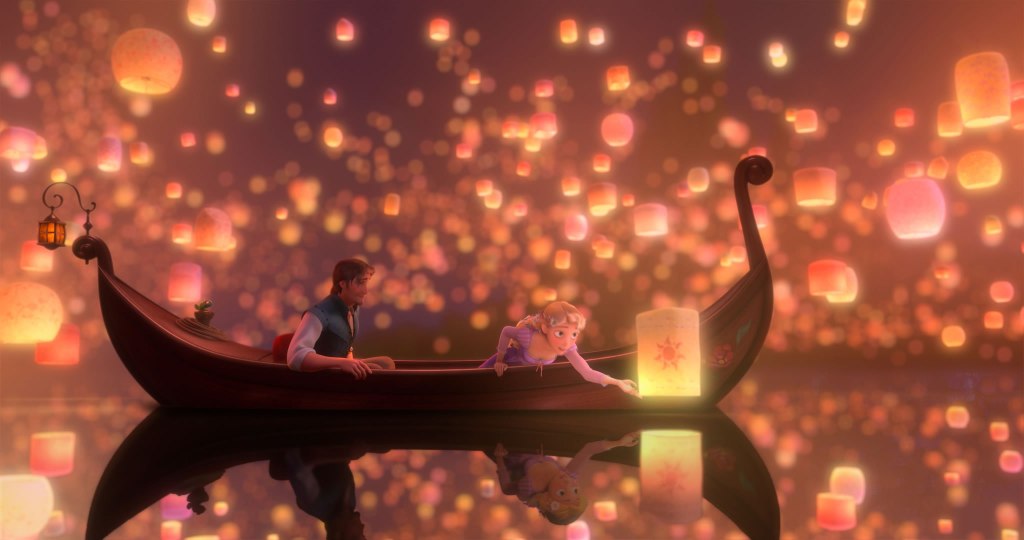
    Reading it back, I certainly respond to the imagery of being a solitary point of light gradually finding oneself within a field of others. The obvious reference is a sea of stars but I do also have a soft spot for the scene in the 2010 Disney film Tangled where Rapunzel and Flynn Rider are in the middle of a lake surrounded by paper lanterns. Now that I think about it, lanterns and candles are a common symbol for someone that we have lost. It’s interesting that when releasing them, we humans never do so one by one, but in a large number. Perhaps it is a common wish that even in death, we never find ourselves alone.

    I actually entered this poem in an international poetry competition last year organised by Rotary International. I thought that it fit the theme of people bringing light into dark situations and finding others who do the same, quite well. It didn’t win anything of course. I knew that when I entered it since it was one of the earlier poems that I had written, but it still felt good to get it out there and helped me build the confidence to start this blog.

    Tangled by Walt Disney Animation Studios

  • And she said “Losing love is like a window in your heart
    Everybody sees you’re blown apart
    Everybody see the wind blow”

    Friendships can be wonderful things. They can also lead to a lot of hurt.

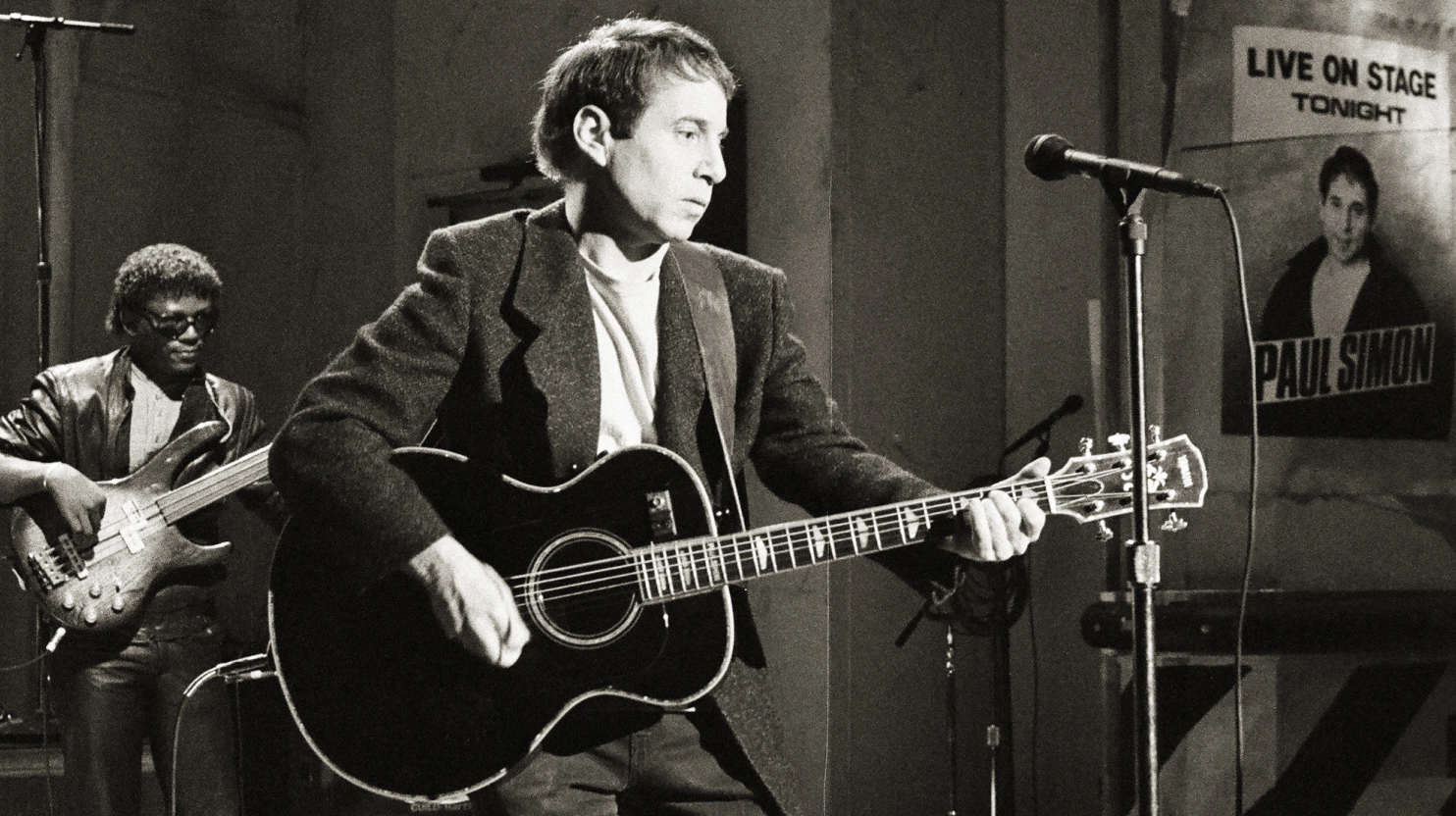
    Many of you reading will probably not know the name Paul Simon, but you may know the name Simon & Garfunkel.

    They were a musical duo that started as childhood friends at the age of 12. A mutual love of music and harmonising brought them together. Eventually, they achieved mainstream success with their single “The Sound of Silence”, written by Paul Simon.

    However, their relationship became strained and led to their breakup in 1972. They both went on to pursue solo careers, with Simon arguable finding greater success. Despite their persistent issues, they reunited several times over the decades to perform together. But each time, they found reasons to separate again.

    While I was aware of Simon & Garfunkel’s most well songs, I only became exposed to Simon’s solo work when I picked out a vinyl copy of ‘Graceland’ to play on my father’s record player.

    Immediately drawn to the familiar South African rhythms and instruments, I decided to lookup the background behind how Simon came to produce such a non-traditional album.

    The album ‘Graceland’ was created in the aftermath of the collapse of Simon’s marriage to Carrie Fischer (Yes, THAT Carrie Fischer.) Simon happened to be given a bootleg cassette tape of South African music and became obsessed with its unique sound. He ended up flying to South Africa to record with local artists, including the soon-to-be world famous Ladysmith Black Mambazo.

    But the true strength of Paul Simon has always been in his lyrics.

    I may not have been in a marriage that fell apart, but in 2015 I was experiencing an emotional fallout of another kind. I remember not having anyone else to talk to, and even if I did, I wouldn’t have known what to say.

    In a weird way, Simon’s lyrics became the words that I didn’t know I needed to get out into the open.

    There are too many favourite songs to gush about so I’ll keep it simple and just talk about one.

    ‘The Obvious Child’ is the main single from Simon’s 1990 album ‘The Rhythm of the Saints’. It’s an energetic, percussion heavy song but about 3/4ths of the way through it slows down and becomes surprisingly melancholic with the following verse:

    Sonny sits by his window and thinks to himself
    How it’s strange that some rooms are like cages
    Sonny’s yearbook from high school
    Is down from the shelf
    And he idly thumbs through the pages
    Some have died
    Some have fled from themselves
    Or struggled from here to get there
    Sonny wanders beyond his interior walls
    Runs his hand through his thinning brown hair

    The line ‘Some have fled from themselves‘ always struck me deeply.

    Taking my father to rehab for the first time as always felt like a truly defining moment in my life. Almost all of my decision making afterwards has felt like it comes from a deep desire to run away from that traumatising memory.

    Sitting alone in my father’s apartment, listening to these words gave me some level of comfort that I can’t entirely describe.

    So much of art is about making a connection to the artist, and the above example is one of the reasons why I still feel so drawn to this short, quiet kid from Queens with his guitar and his words.

    Paul Simon on SNL, 1993
  • The Dancer weaves her many arms,
    Slowly rising toward the night sky.
    A dreaded goddess given form.

    Her days in the sun are past,
    back when the Earth was young.
    Her fingers reaching higher.

    Drinking the nectar of life,
    greedily she hide it away,
    Within her bower.

    Now deep in slumber,
    in the halls of Gaia.
    She feels the weight of eons.

    Long did the dark corrupt,
    Stripping bare the flesh.
    But her boon yet remains.

    Now it proves precious.
    A diamond without glamour,
    more brilliant in purpose

    Besooted they delve,
    to raise up her bones.
    The children of iron.

    A new life she is given,
    Light against the darkness,
    a warm embrace against the cold.

    Not without a price,
    but who is she to deny?

    The dancer performs her last,
    before returning to the stars.

    First off, yes, I know I mixed up charcoal and coal. It took me way longer than I should have to notice this obvious mistake. But at the end of the day, it’s all carbon in one form or another.

    This poem is one of a small number I have written that is not inspired by my own experiences. I wrote it after a friend shared that their Ex wrote a song about them they thought was very unfair and hurtful. I decided to take a crack at writing something that they could be proud of. Their professional name is Charcoal and so I decided to go with a literal interpretation.

    The process of creating coal and creating diamonds is not too dissimilar. Formed deep underground, they are made by decades of high pressure. I thought about all the struggles that my friend had gone through and how it made them a stronger person. But also how they felt that others often wished to take advantage them for their own desires. The analogy felt very obvious to me.

    When I shared the poem with my friend, they responded to the final stanza the most. I had added it very last minute, when thinking of the ultimate fate of a piece of charcoal, the smoke from a campfire twisting and swirling as it rises to the night sky. I wasn’t thinking of my friend at all, and yet my subconscious chose to picture them as a dancer. My friend has since started training in dance.

    Perhaps this is a lesson to not always go with the most obvious interpretation of a subject, but to rather let my imagination steer me and trust that it will guide me to where I’m meant to be.

    Candle Smoke Structure by Tigerzeng

  • To my great shame, I have never read A Long Walk to Freedom.

    Growing up in South Africa, the story of Mandela is so wrapped up in the story of the country itself, reading his biography can feel unnecessary. I thought I knew all there was to know about his life.

    That’s why I was surprised when, while attending a Sunday morning service at St George’s Cathedral, I was deeply affected by a detail shared by the presiding pastor.

    He mentioned a painting drawn by Mandela after his release, in which he illustrated the view from his jail cell on Robben Island. The pastor described the all too familiar silhouette of Devils Peak, Table Mountain, and Signal Hill, that are shown through the bars. But as the pastor quickly noted, and which I had already realised, this is not actually the view one can see from cell 46664. Having been to Robben Island several times, I knew that this window only looked down into the prison courtyard.

    I was truly surprised when I found myself tearing up.

    Being born and raised in Cape Town, the site of the mountain has always given me a great sense of comfort and safety. When returning from a trip overseas, I never truly felt at home until I could glimpse those green and grey slopes during the car ride back from the airport.

    If you lookup the other drawings in this series by Mandela, they all depict various parts of Robben Island, like the harbour or the chapel, in a relatively realistic fashion. Mandela’s choice to depict the view from his cell window as the distant land that he surely hoped to return to one day, struck me very deeply.

    I’ve not made it a secret that this year has been a awful one for me, and I have often caught myself during the course of this year, being unable to look ahead and think about the future. I have been so bogged down in the troubles of the present, I was staring at my feet unable to take the next step along the road.

    The thought of Madiba choosing to see this symbol of defiance and freedom rather than the confines and hardships of his prison, effected me greatly.

    We might not be given a choice in the windows we are given in life, but we are always free to choose the view we see through them.

    The Window by Nelson Mandela

  • In the Beginning, they said
    there was nothing.

    To me, the Universe was
    born with your smile.

    René said she strode
    from my own mind.

    Now she is gone,
    playing in another’s Dreams.

    Albert wrote that days
    would quicken at her approach.

    Yet it always feels
    like Twilight in her absence.

    Isaac decreed my walls
    would fall at her gaze.

    But her scent,
    would lift me to the Heavens.

    Kurt showed not even
    the great sage can know all.

    Deep within her eyes,
    I could swim within Eternity.

    Stephen pictured the darkest
    corners filled with light.

    In my heart, only the
    Ghost of her radiance remains.

    Edwin observed,
    the fleeing of the stars.

    Like her laughter,
    an Echo slowly fading away.

    Niels measured the
    distance between things.

    Now I know why
    her Touch felt so soft.

    I had the idea for this poem while I was dating someone. It was a super nerdy expression of devotion. But before I could actually write it down, the relationship ended abruptly. Several months later, I decided to create the poem anyway, thinking it might help me find some sort of answer. But as I began to write the first words, it quickly evolved into something very different to my original idea. I had changed as a person therefore, the poem had to change with me.

    In some ways, I am sad that I never wrote that original version. But if I had, the version that you see above would never have existed. The title ‘I Know They’re Wrong’ doesn’t make sense for the poem as it is today, but I decided to keep it as a way to honour that version of me that had the original idea. Me before the heartbreak.

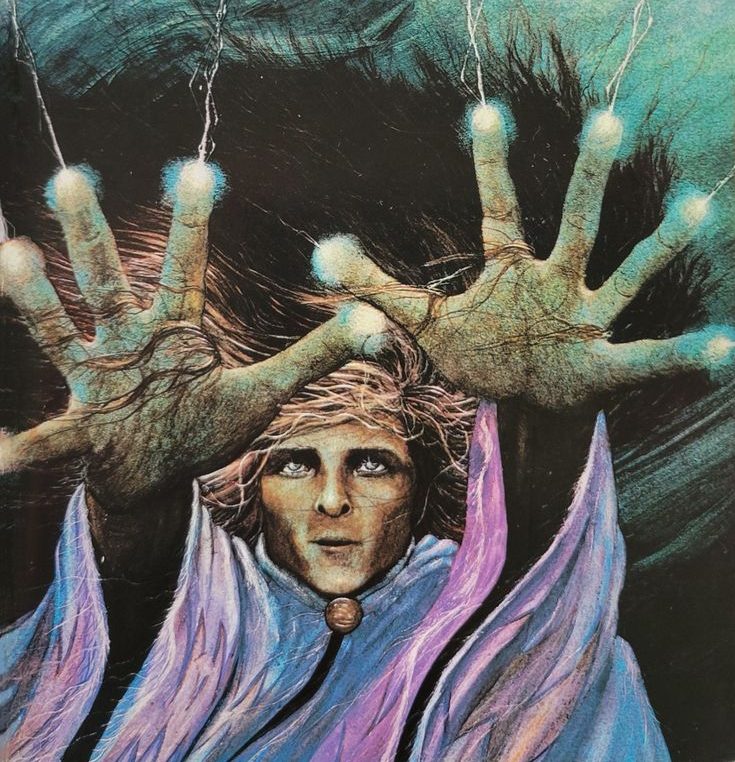
    Art changes over time. Despite what we may think, it’s never static. One of my favourite books when I was younger was the Earthsea Trilogy. It depicts a fantastical archipelago of islands containing dragons, wizards, and shadowy demons. The original three books were written between 1968 and 1972 by Ursula Le Guin. Years later she decided to revisit the world of Earthsea, largely because of the criticism the male-oriented nature of the first trilogy received. As a response, she wrote the novel Tehanu, a deeply reflective book on the place of women in society. She later wrote the final book of the Earthsea series, The Other Wind, which upended the very concepts the original novels were based on.

    By the final lines, I found the world that I loved as a child far richer than I could have imagined before and I only wished that I could express my gratitude to Mrs. Le Guin for allowing me to join her on this journey.

    Cover of Earthsea Trilogy by Ursula Le Guin

  • I’m a very anxious person.

    Worrying about what other people think of me, or rather what I think other people think of me, takes up far more of my life than I would like to admit. I once went a whole year without using my locker at school because it happened to be located just outside the girls change-room and I was terrified everyone would think I was a pervert.

    But there is one aspect of my life that has somehow become immune to these constant thoughts of worry.

    Dance.

    Now, I would hardly call myself a great dancer. Even a good dancer would be a stretch. But unashamed and confident? Most certainly.

    I didn’t start out this way, of course. The first time I went to a club, I had a mini panic attack while walking home convinced that every single person on that packed dancefloor could see how terrible I was.

    But I kept doing it even though I was constantly aware that I had no idea what I was doing and that there was always someone else on the dance floor who clearly did know and was better than me.

    At some point, I can’t exactly remember when, I began to think about why I kept dancing despite the constant fear of being judged.

    I came to the conclusion that even with all the social pressure I felt and the worry that I would do the wrong thing, dancing actually made me feel good.

    Becoming one with the beat, throwing my head back, mouthing the few lyrics that I actually knew.

    These were small moments I no longer felt that dark presence that always appears whenever I am at my lowest.

    So I finally told myself “Fuck it, who cares if others think that I’m a freak with zero coordination? I’m going to have a good time with or without their perceived approval.”


    The irony of this change in attitude only became apparent several years after this moment when I was attending a friend’s wedding. I had danced for hours with friends and strangers alike, soaked with sweat, and feeling the sweet siren song of my hotel bed.

    As I was saying my goodbyes to the bride and groom, they both thanked me profusely for the all the fun and ‘gees’ that I had brought to the wedding. My commitment to having fun and being unashamed to share it with those around me had made their special day just a little bit more special.

    By deciding that I didn’t care if I pleased others or not, I ended up getting exactly what I wanted all along.

    So like Chappell Roan said, I’m gonna keep on dancing.

    “Pink Pony Club” by Chappell Roan
  • Who will sing her to sleep,
    when all the candles are burned,
    when all the winds have died?
    
    Eons after the choir is silent,
    does not their chorus echo,
    in the dark and in the deep?
    
    Through crumbled halls,
    and broken rings,
    the sound still stalks.
    
    From one tiny corner,
    long past its end,
    the song still calls.
    
    A billion souls and a billion more,
    did labour and bare,
    not knowing their part.
    
    The fullness of Creation,
    the greatest play of all,
    to show at last,
    the dust did roar.

    Being proud of my work is not something that comes easy to me. But when I completed the above poem, I confess that I did manage to feel a sense of creative joy, particularly spurred by the last line. I remember googling the words convinced that I had read it somewhere before and was merely regurgitating it unconsciously. When I couldn’t find anything remotely similar, I had to come to terms with the fact that I had created something original and that I liked it.

    The poem ponders whether there will be any sign that of humanity ever existed when the universe reaches its inevitable heat death and if there is even meaning to the various works of humans when a cold and silent universe is all we can ever expect to survive. I was inspired the famous painting of Alan Lee that depicts the fellowship of the ring passing through the long abandoned great halls of the dwarf kingdom Moria. I tried to imagine travellers in the far future walking through the ruins of humanity and what they would think of the results of all our toils.

    The Eastern Arches by Alan Lee

  • Hope that you will join me on this journey, sharing my poetry both old and new, as well as some essays that already have some great ideas for. Happy scrolling!